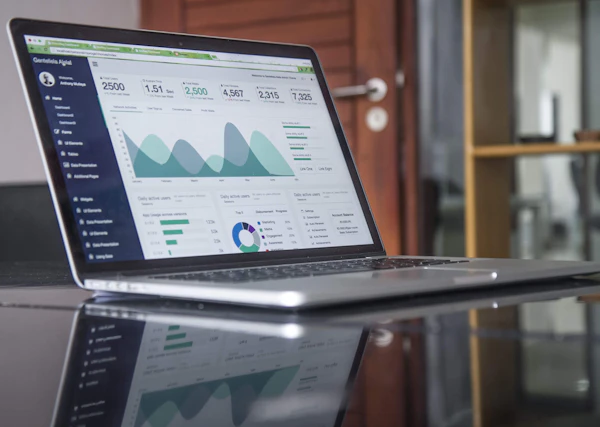
There is a moment every business owner knows well.
You finally crack the code on traffic. Your Google Ads are running. Your SEO is climbing. Your social media is pulling people in. The dashboard looks beautiful — sessions up, impressions up, clicks up.
And then you look at your revenue. Nothing moved.
This is the defining frustration of digital marketing in 2025, and it is about to become the defining opportunity of 2026. Because while most businesses are still fighting tooth and nail over traffic — spending more, bidding higher, posting more content — a quieter revolution is happening behind the scenes.
The businesses that will dominate their local markets and national niches in 2026 are not the ones with the most traffic. They are the ones with the fastest pipes.
The Traffic Generation Myth
Let us be direct about something the digital marketing industry does not say loudly enough: Traffic has never been easier to generate. And it has never mattered less on its own.
Consider these numbers shaping the 2026 landscape:
Website Conversions
96 out of 100 people you pay to bring to your website leave without doing anything.
Monthly Ad Spend
Average local business spend, yet fewer than 22% have a structured follow-up system.
Conversion Drop
The decrease in conversion likelihood if response time drops from 5 mins to 30 mins.
Twenty-one times less likely to convert if you wait just twenty-five extra minutes. Yet most local businesses are responding to leads in hours. Some in days. Some never.
This is not a traffic problem. This is a conversion velocity problem.
What Is "Conversion Velocity"?
Conversion velocity is a term borrowed from sales pipeline management, and it is about to become the most important metric in your digital marketing vocabulary.
"Conversion Velocity = The speed and efficiency at which your business turns a stranger into a paying customer."
It is not just about speed, though speed is critical. It is about the entire system — the pipes, the automation, the nurture sequences, the touchpoints — that moves someone from "I just clicked your ad" to "I just paid you money" with as little friction and as much intelligence as possible.
Company A has a website with a contact form. Company B has a contact form connected to an AI-powered CRM that sends an immediate text, triggers an email sequence, and books a callback within eight minutes. Same traffic. Completely different conversion velocity.
The 5 Biggest Digital Marketing Trends Driving Conversion Velocity in 2026
Trend 1: AI-Powered CRO Replaces Guesswork With Precision
Conversion Rate Optimization (CRO) used to mean running A/B tests on button colors and hoping for a 0.5% lift. In 2026, modern AI CRO tools analyze user behavior at a granular level — heatmaps, location, traffic source, time of day — and make real-time adjustments to your website experience for different visitors.
For local businesses specifically, AI-powered CRO means your landing pages can dynamically display the name of the visitor's specific neighborhood, local reviews, and distance to your nearest service location.
Trend 2: The "Speed-to-Lead" Infrastructure Becomes Non-Negotiable
The business that responds first wins. Almost every single time.
In 2026, "speed-to-lead" infrastructure means building automated systems that respond in under two minutes, around the clock. This includes AI-powered webchat, instant SMS response triggers on form submission, and Voice AI receptionists that handle basic qualification without any staff involvement.
Trend 3: Hyper-Local Content Ecosystems Replace Generic Blog Posts
Publishing generic "10 Tips for Homeowners" blog posts is a waste of budget. Google's AI Overviews absorb generic content instantly. What survives and thrives is content with deep local specificity.
- Instead of "How to Choose an HVAC Company," write "Why Houston Homeowners Face Unique Air Quality Challenges."
- Instead of "Benefits of a Personal Injury Attorney," write "What Happens After a Car Accident on I-35 in San Antonio."
A visitor landing on deeply relevant local content converts at 3x to 5x the rate of a generic visitor.
Trend 4: Marketing Automation Gets a "Local Intelligence" Upgrade
Traditional automation sends a sequence to everyone who fills out a form. Local intelligence automation sends sequences based on which neighborhood a contact is in, what service they inquired about, and whether they came from organic search or paid ads.
Geofenced retargeting, neighborhood-based personalization, and smart review requests build trust exponentially faster than broadcast blasts.
Trend 5: Multi-Channel Attribution Finally Gets Solved
True multi-touch attribution in 2026 means understanding that your customer found you via a Google search, watched a YouTube ad, saw a retargeting post on Instagram, opened an email, and finally called after reading a local review. Each touchpoint deserves credit. Understanding this journey lets you build a pipeline that runs at maximum efficiency.
The "Pipe System" Framework
Think of your conversion system as plumbing. Traffic is the water. But water needs pipes, pressure, valves, and direction to get where it needs to go. Here are the 5 Pipes every local business needs in 2026:
-
1The Capture Pipe
Make it effortless to raise a hand. High-converting landing pages with AI-tested headlines, local personalization, and mobile-first design.
-
2The Speed Pipe
Make first contact in under 2 minutes. Deploy AI webchat, automated SMS triggers, and mobile notifications for your sales team immediately upon capture.
-
3The Nurture Pipe
Stay relevant until they are ready to buy. Segmented email sequences based on service interest, retargeting ads, and value-first SMS follow-ups.
-
4The Conversion Pipe
Remove every possible obstacle to saying yes. Easy online booking, transparent pricing processes, and risk reducers like hyper-local video testimonials.
-
5The Loyalty Pipe
Turn customers into a referral engine. Automated review request sequences triggered dynamically, and VIP communication for repeat customers.
Action Steps: Start Building This Week
Week 1: Audit Response Time
Test your own lead form. How long before you hear back? Set a goal to get under 5 minutes.
Week 2: Install AI Webchat
Deploy an intelligent widget to capture visitors who would otherwise leave.
Week 3: Map Nurture Sequence
Write out the 3-5 texts/emails a new lead should receive in their first week.
Week 4: Review GBP
Enable messaging, track response times, and automate the review request process.
The Competitive Window Is Open — But Not Forever
Right now, in most local markets across the United States, the majority of businesses are still fighting the traffic war. The conversion velocity revolution is still in early adoption.
There is a window—perhaps 12 to 18 months—where building sophisticated automation pipes gives you a disproportionate competitive advantage. When a competitor has a two-minute response time, an AI nurture sequence, and 200 five-star reviews, and you are still answering contact forms by the end of the day—the outcome is not a fair fight.
Final Thought: The Pipe Builders Win
During the Gold Rush, the people who got rich were not always the ones finding the most gold. They were the ones who built the infrastructure—the supply stores, the railroads, the water systems—that made it possible to extract and deliver gold efficiently.
In 2026's digital marketing landscape, traffic is everywhere. Gold is everywhere. The question is whether you have the infrastructure to capture it, convert it, and compound it faster than the business competing for the same customers.
Build the pipes. That is the 2026 competitive advantage.